Enter the Image Ecology

Gumtree / 桉树

A suspended archive of eucalyptus, migration, and more-than-human observation.

Scroll to enter

Documentary Project

Gumtree / 桉树

A long-term documentary project tracing eucalyptus across Australia and southern China, between ecology, industrial cultivation, and more-than-human perception.

The film follows how a tree species moves between native habitat and intensified plantation systems, and how that migration carries questions of life, extraction, science, controversy, and technological management.

Focus

Eucalyptus as ecology, industry, and contested lifeform

Geographies

Australia / Guangxi, China

Approach

Observational documentary with restrained digital translation

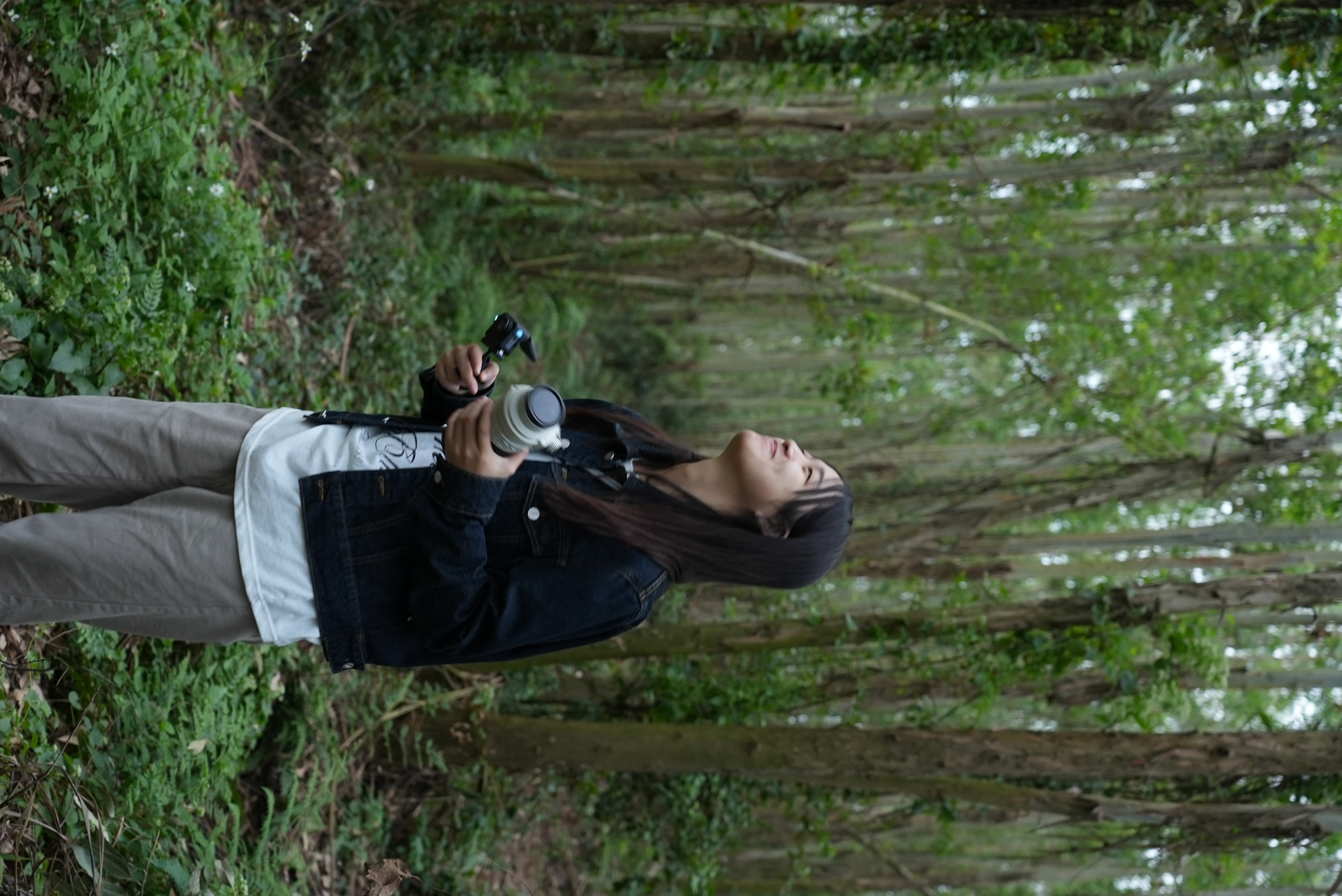
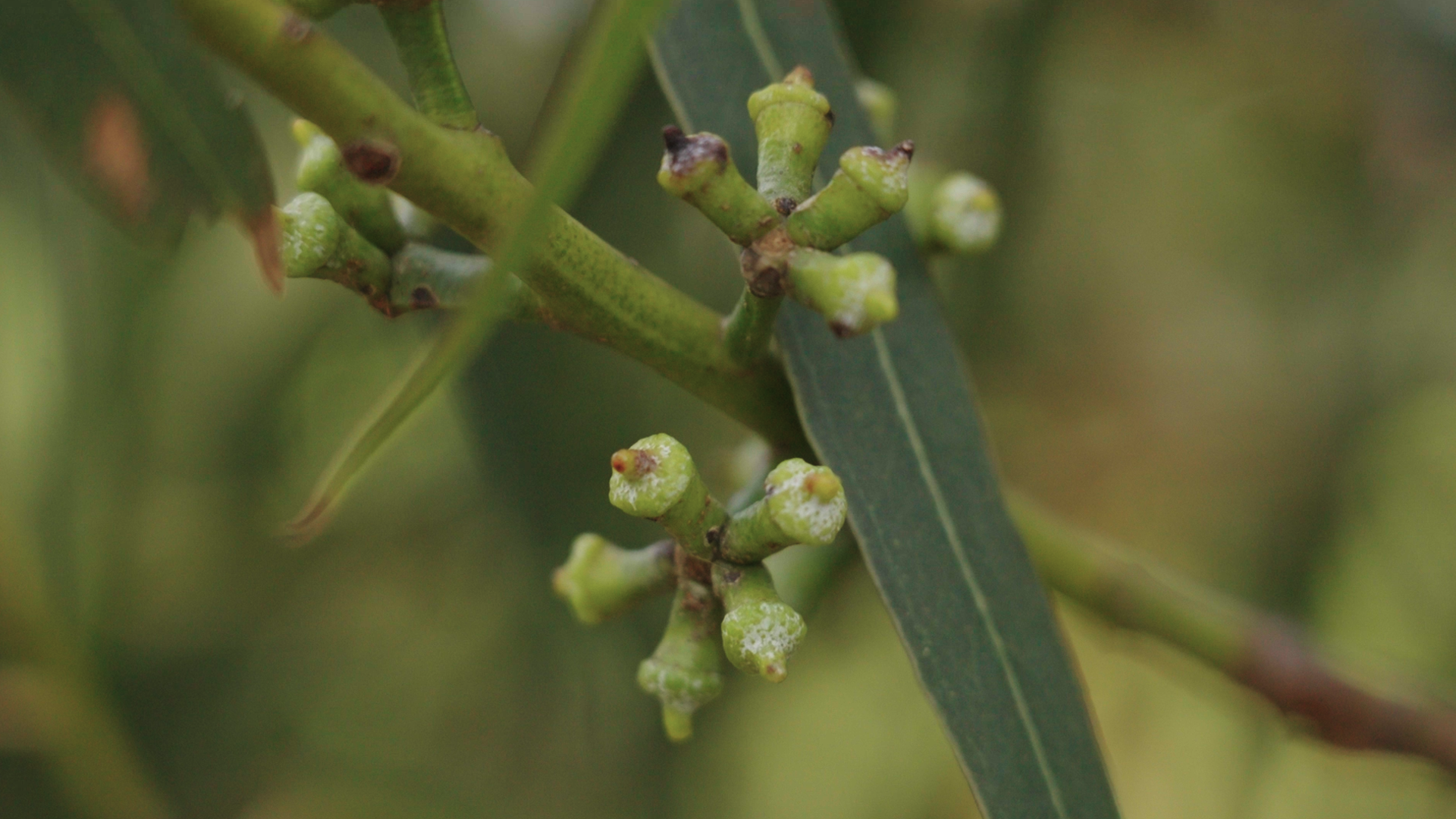
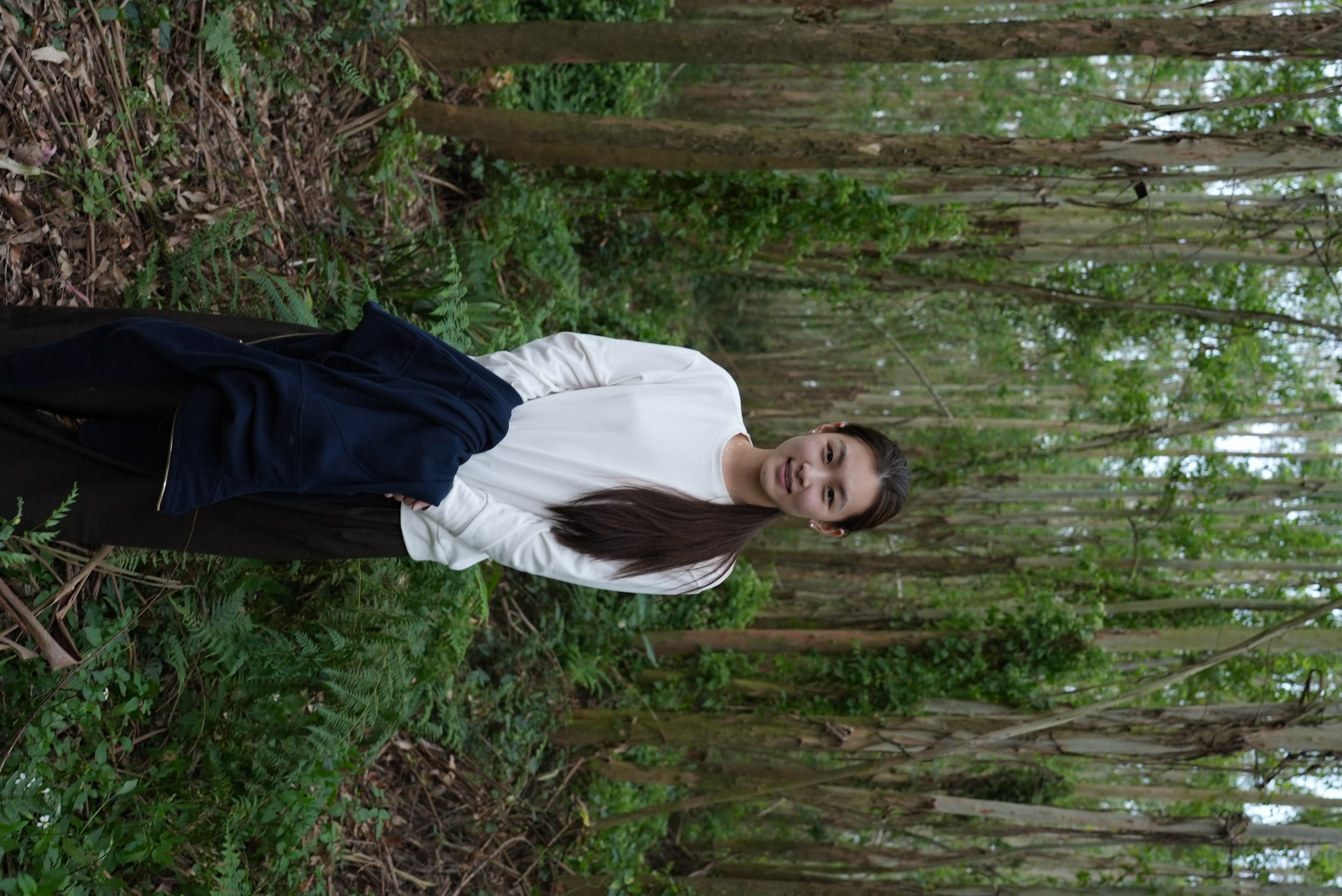
Film still from Gumtree
Field image from the projectGuangxi / Australia

01

Overview

A plant history read through migration, cultivation, and changing regimes of value.

Native to Australia and nearby regions, eucalyptus accounts for more than seventy percent of Australia’s forest area and remains central to its ecological systems. Introduced to China in the late nineteenth century, it was later planted extensively across several southern provinces, with Guangxi Zhuang Autonomous Region now accounting for more than half of the country’s eucalyptus area.

Because of its rapid growth, high yield, and relatively low cultivation cost, eucalyptus has become a key raw material in China’s timber economy. Gumtree approaches this history not as a simple environmental case study, but as a way to examine how plant life is selected, optimized, and reorganized by development, logistics, research, and global circulation.

Australia

Eucalyptus remains foundational to its native ecological landscape.

China

Guangxi alone accounts for more than half of the national eucalyptus planting area.

Question

What happens when a lifeform shifts from being embedded in habitat to being managed as volume, yield, price, and utility?

02

Synopsis

By tracing the migration and development of eucalyptus, the film examines how a tree species becomes entangled with the infrastructures of modern growth. Moving between native forest and industrial plantation, it asks how a living being is translated into resource, controversy, measurement, and future projection.

Rather than staging a thesis through heavy explanation, the documentary stays close to places, rhythms, and material situations. The work turns toward eucalyptus not only as an economic species, but also as a living presence through which relations between human systems and surrounding life can be seen again, and perhaps seen otherwise.

03

Why This Film

The project emerged through repeated fieldwork rather than from a one-time proposal.

The first impulse came during research in Australia, where eucalyptus appeared not as an industrial symbol but as a dominant presence within a native ecological system. The tree shaped atmosphere, memory, and landscape, and seemed inseparable from place itself.

Later, in Guangxi, the same species appeared within a very different reality: large-scale plantations, breeding experiments, industrial supply chains, and persistent public arguments around water, soil, fertility, and environmental pressure. The contrast between these sites revealed that the migration of eucalyptus is already a story about ecology, economy, technology, and globalization.

For the team, Gumtree is part of an ongoing interest in image-making around the relationship between nature and human systems. It has grown gradually through early shooting, return visits, and accumulated research materials rather than through a single conceptual frame.

04

Form & Method

A documentary language built from duration, proximity, and parallel structures.

The film is rooted in observational documentary practice. It records real time, real space, and real subjects without explanatory voice-over, fictionalized plot, or non-synchronous speech added from outside the scene. The moving image remains the primary carrier of information and affect.

Digital techniques enter only in limited and restrained ways. They do not replace documentary realism; they widen observation slightly, allowing the film to register plant movement, spatial memory, and technical mediation without collapsing into spectacle.

01

Ground-based observation of forests, plantations, labor, and cultivation environments

02

Drone footage that reveals plantation structure, density, and spatial distribution

03

3D scanning and reconstruction using tools such as Luma AI

04

Selective visual translation of wind, branches, and foliage through motion capture and TouchDesigner-based processing

05

A multi-line structure moving between scientific breeding, ecological observation, and industrial practice

06

A cross-continental dialogue between Australia as native habitat and China as introduced, industrialized habitat

05

Visuals

Current stills from fieldwork and early filming. The gallery is arranged as a suspended image field rather than a slideshow.

06

Creators

A small team working across documentary practice, ecological research interests, and image-based inquiry.

01

Kio Wang (Jingxiong Wang)

Director / Editor / Sound

Film, TV and Media Art student at Tongji University, working across documentary image-making, editing, and sound-based narrative construction.

His previous work Soft Ruins was selected for the Cinemaking International Film Festival, and Shanghai in Hands received an award at the Shanghai International Student Advertising Festival.

Soft Ruins — Official Selection, Cinemaking International Film Festival

Shanghai in Hands — Award, Shanghai International Student Advertising Festival
kiowang68@gmail.com

02

Creekie Zhu

Co-Director / Producer

Film, TV and Media Art student at Tongji University, with a focus on production process, field coordination, and the shaping of documentary research trajectories.

For Gumtree, she works across project development, field organization, and the practical continuity required by long-term documentary production.

Long-term field coordination

Production development

Research continuity

03

Hazel He

Co-Director / Cinematography

Film, TV and Media Art student at Tongji University, attentive to spatial perception, camera observation, and the relation between image texture and environment.

Her work on Gumtree centers on cinematography and visual continuity, especially in relation to plant movement, terrain, and changing ecological atmosphere.

Cinematography

Visual continuity

Field observation

hexinyi213@163.com
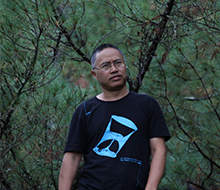
Portrait of Kai Jia

Kai Jia

Creative Supervisor

Professor at the College of Communication and Art, Tongji University; filmmaker, educator, and long-term participant in documentary practice and teaching.

Together with Xiaofeng Li, he has co-directed multiple documentary works including My Last Secret, Everywhere Black Gold, Yesterday Fantasy, Pilgrimage Notes, and Mrs. Du’s Summer.

Yesterday Fantasy — Best Feature Documentary, 10th FIRST International Film Festival

Mrs. Du’s Summer — Special Mention from the Jury, Beijing International Short Film Festival

863055366@qq.com
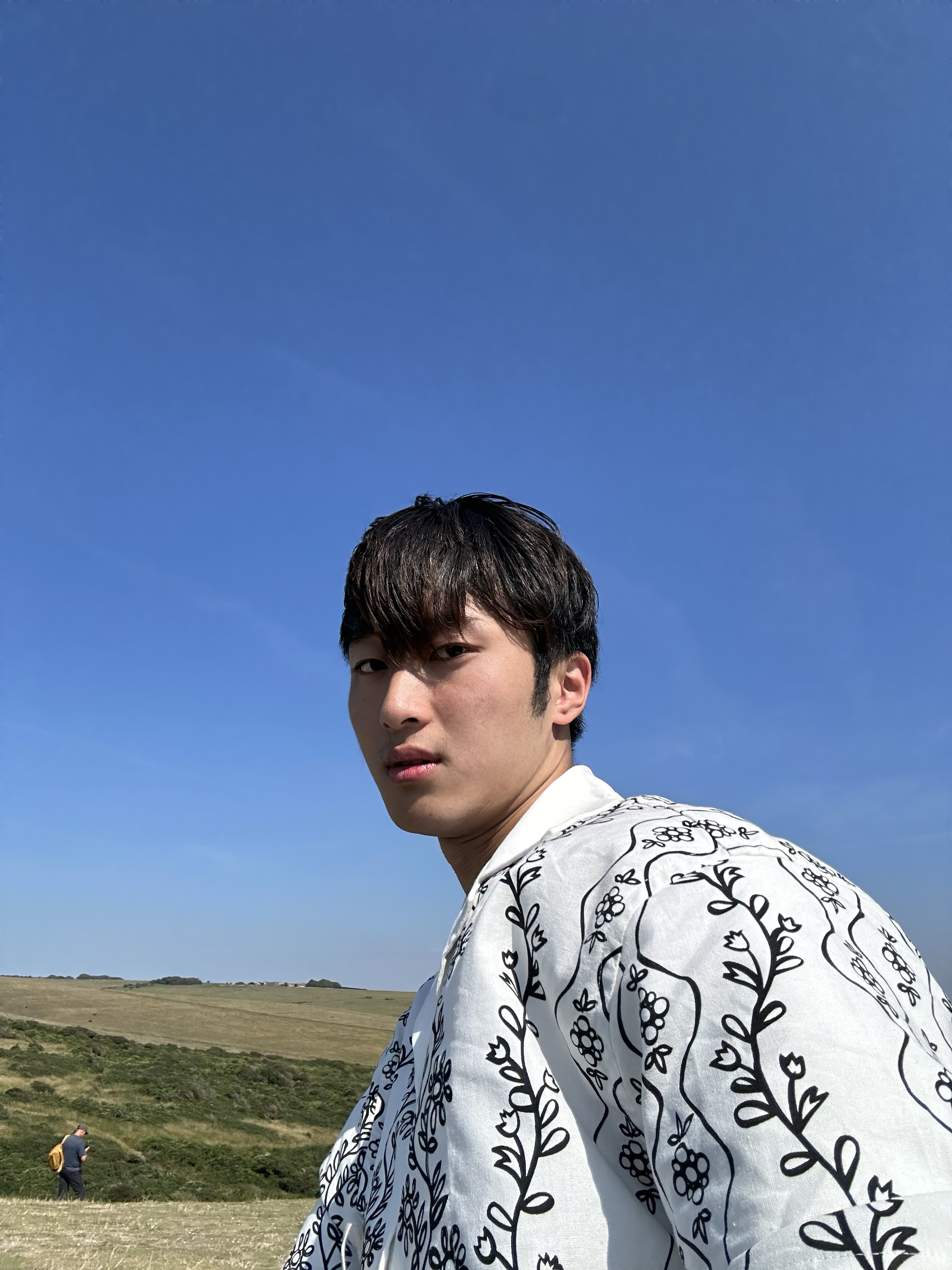
Portrait of Xiaofeng Li

Xiaofeng Li

Creative Supervisor

Documentary filmmaker, writer, and educator whose practice moves between moving-image creation, research, and public discourse on nonfiction cinema.

His collaboration with Kai Jia forms an important reference for the project’s documentary sensibility: attentive, grounded, and open to the complexity of social reality.

Joint works include My Last Secret, Everywhere Black Gold, Yesterday Fantasy, Pilgrimage Notes, and Mrs. Du’s Summer

Creative supervision on documentary structure and long-duration observation

863055366@qq.com

07

Contact

For festival dialogue, research exchange, or project correspondence.

The project is currently developing through fieldwork, image research, and documentary production. For screenings, institutional contact, or editorial inquiries, please use the addresses below.

Current materials

Fieldwork photographs from Guangxi and Australia, forestry-related reporting, and reference materials from research institutions.

Project orientation

Ecology, industrial forestry, scientific breeding, and more-than-human perception.

Status

Long-term documentary project in development.